
Atmospheric Physics (Prof. Ulrike Lohmann)
Group overview
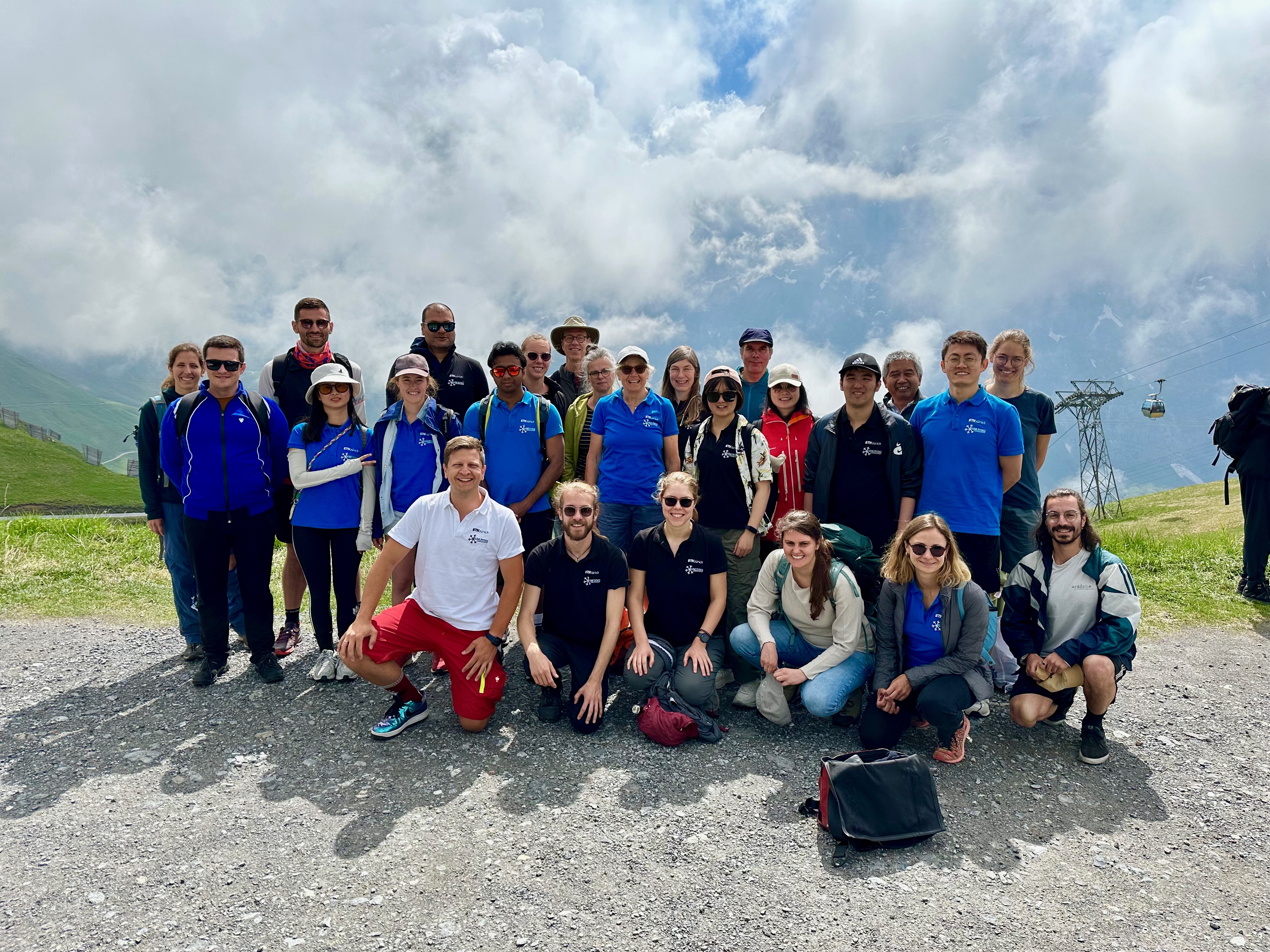
Professor Lohmann's group focuses on the formation and evolution of clouds with a special interest on ice crystals and aerosol-cloud interactions. This is done by improving the simulations of clouds for weather and climate, lab experiments on ice crystal formation and field experiments, the latest of which evolve around using clouds as a natural laboratory as funded by the ERC CLOUDLAB project.
A series of interviews and documentaries exists that explain the goals of our research. They can be found on our media page.
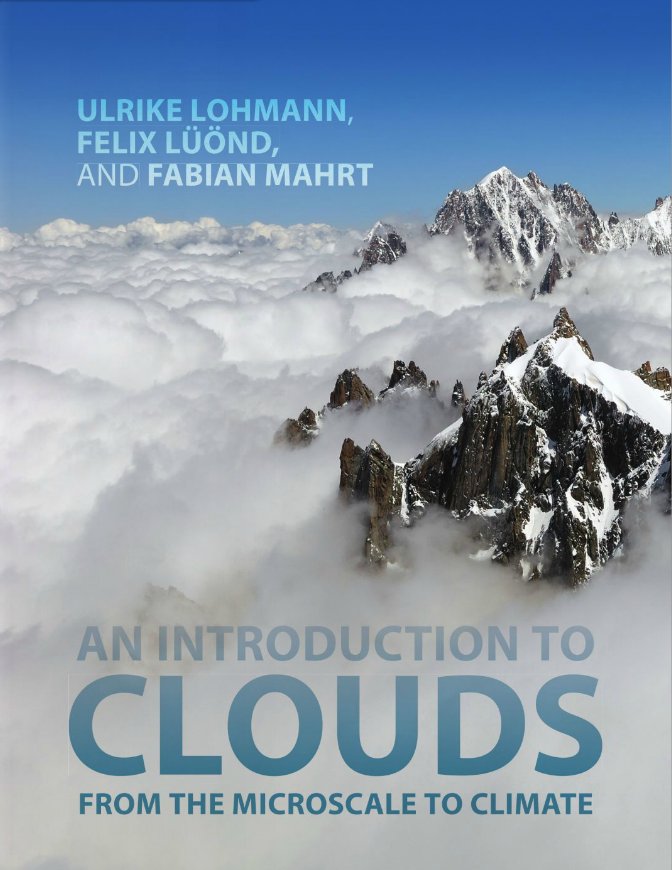
An Introduction to Clouds provides a fundamental understanding of clouds, ranging from cloud microphysics to the large-scale impacts of clouds on climate. For more information visit the external pagepublisher's webpage. An up-to-date list of known errata can be found Downloadhere (PDF, 140 KB).
Research
Cloud feedbacks in response to greenhouse gas warming remain one of the largest uncertainties for climate change predictions (external pageIPCC, 2021). Clouds reflect solar radiation causing a cooling and absorb and re-emit terrestrial radiation causing a warming. While the cooling effect of clouds dominates for low-level clouds (stratus, stratocumulus), the warming effect dominates for high-level ice clouds (cirrus).
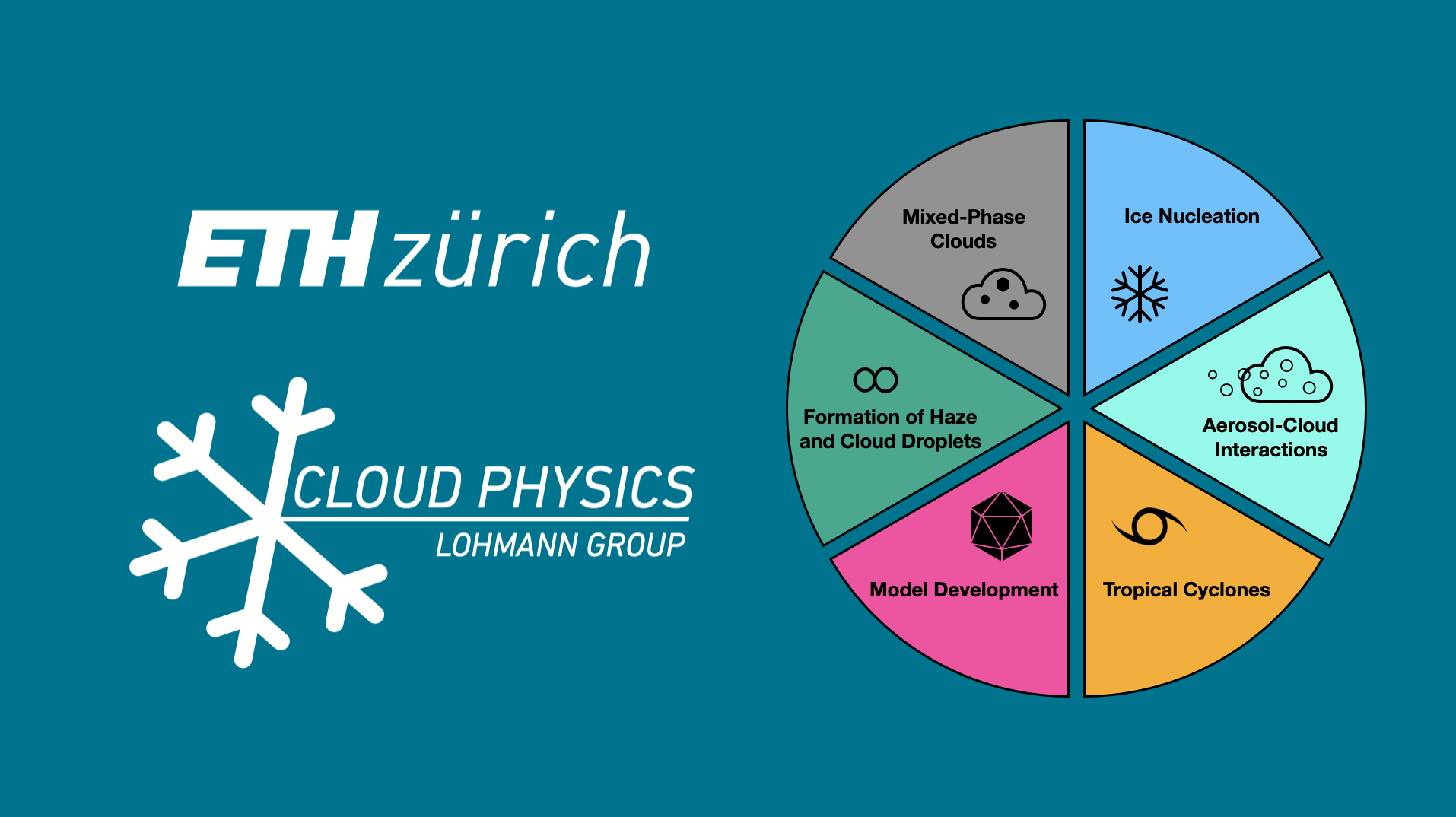
Aerosol particles also scatter and absorb solar radiation and determine cloud microphysical properties by acting as cloud condensation nuclei (CCN) and ice nucleating particles (INPs). The radiative forcing of aerosol particles resulting from human activities has the largest uncertainties of all anthropogenic forcing agents (external pageIPCC, 2021). Especially the details of ice formation and subsequent processes involving ice crystals in clouds are not fully understood. We focus our research on understanding ice formation and growth in clouds through laboratory measurements, field observations, and modelling on various scales. Please use the map of research topics below to the related topics to learn more!
- List of group members
- Thesis topics for BSc and MSc students
- Group meetings
- Media
- List of publications
- Data accessability - external pageZenodo