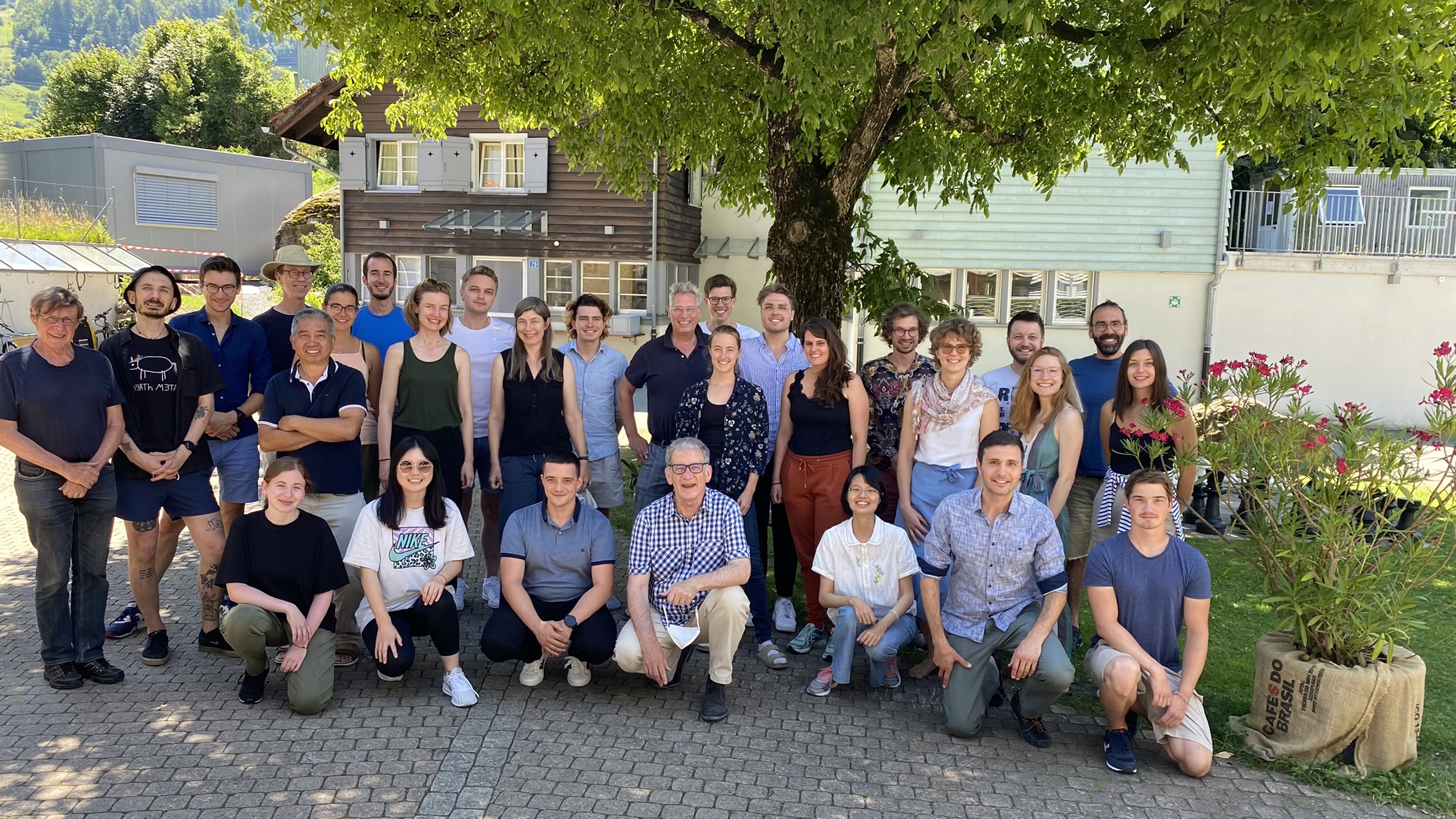
Atmospheric Chemistry (Prof. em. Thomas Peter)
Why is atmospheric chemistry interesting?
The obvious answer is: because of its importance for air quality, which influences ecosystems and human health. But this is by far not the only answer. Chemical processes in the atmosphere also play an important role in the climate system.
Atmospheric chemistry affects biogeochemical cycles (e.g. the carbon, nitrogen, and sulfur cycles) and the life cycle of condensable species. Chemical and physical processes determine the radiative influence of important non-CO2 greenhouse gases and aerosols. On a per-molecule basis, many of these gases are radiatively much more potent greenhouse gases than CO2. Methane (CH4), nitrous oxide (N2O) and ozone (O3) are prominent examples. On the other hand, condensable organic and inorganic species lead to secondary aerosol formation with significant cooling efficiencies.
- More information on our research
- Group members
- A list of publications
- Master thesis Downloadtopics (PDF, 2.3 MB)